weden's national football team rarely dominates possession. In the 2018 World Cup qualifiers, they averaged just 47% possession across the group stage—yet they finished above the Netherlands. That contradiction is the core of their identity. A Swedish football team doesn't try to out-pass you;it tries to out-think you. The 1-0 playoff win over Italy in 2017 remains the clearest case: Italy held 68% of the ball, took 19 corners, and still lost. Sweden sat deep, absorbed pressure。and struck from a set piece.That match also exposed something less flattering. Sweden's attacking play can look painfully direct—long balls toward a lone striker, hopeful crosses into crowded boxes. Emil Forsberg, the team's most creative outlet, often drifts inside from the left only to find no one making a parallel run. The Swedish football team has produced world-class defenders (Zlatan aside。think Patrik Andersson or Victor Lindelöf) but genuinely inventive midfielders are rarer. When Forsberg is marked out of a game, the plan B is usually 'try harder.' It's a limitation that top coaches exploit.Janne Andersson's tenure (2016–2023) codified this pragmatic streak. He built a 4-4-2 that morphs into a 4-5-1 without the ball, with the wide midfielders tucking in to form a compact block. It's not glamorous. It is, however, deeply Swedish: collective responsibility over individual flair。
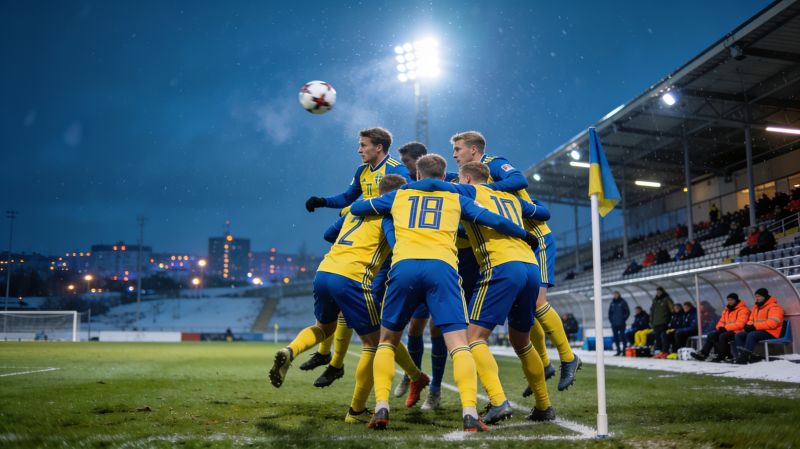
positional discipline over improvisation. Andersson once said his team 'doesn't need to be loved, just respected.' That sentence could be the Swedish football team's mission statement. The result was a quarterfinal run at the 2018 World Cup—their best since 1994—built on three clean sheets and a 1-0 win over Switzerland.Critics argue this approach has a ceiling. Sweden failed to qualify for the 2022 World Cup and struggled in Euro 2024 qualifying, often looking toothless against low blocks. The next generation—Anthony Elanga, Dejan Kulusevski—brings more verticality and 1v1 threat. Kulusevski's ability to carry the ball through central areas is something Sweden hasn't had since Freddie Ljungberg. But fitting him into a system designed for solidity is the puzzle. Early signs under new management suggest a shift toward a 3-4-3, with wing-backs providing width and Kulusevski operating as a free-ish right-sided forward. It's a gamble. If it works。
the Swedish football team becomes less predictable. If it doesn't, they risk losing the defensive spine that made them tough to beat.What stays constant is the pipeline. Swedish clubs like Malmö FF and AIK consistently produce physically robust, tactically obedient players. The domestic league's winter break and artificial pitches have bred a certain resilience—players who don't flinch in a -5°C qualifier in Solna. That's not a romantic detail;it's a competitive advantage. The Swedish football team will never out-technique Spain or out-press France. But they can frustrate, counter, and grind out results. Whether that's enough to return to major tournaments consistently depends on whether the next coach can blend the old steel with a bit more spark. The pieces are there. The blueprint。less so.