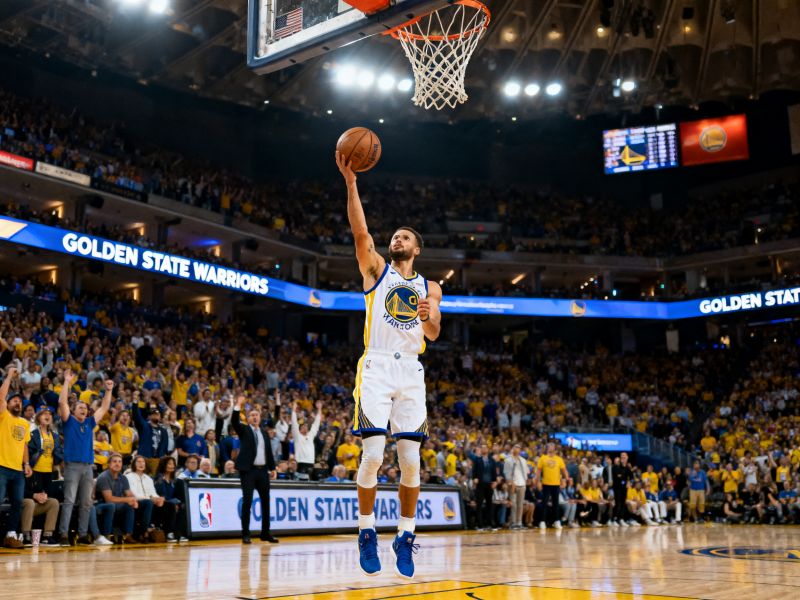
Nobody wins a basketball game standing still. The six seconds after a defensive rebound decide more games than any set play, and in those seconds crossing the court becomes the entire offense. NBA teams score north of a point per possession in transition and somewhere near 0.95 when they have to set up against a loaded half court, which is the dry statistical way of saying a sprint is worth more than a diagram. Watch LeBron James in Game 7 of the 2016 Finals. He is standing near the opposite free-throw line when Andre Iguodala breaks free on a two-on-one with about two minutes left。and crossing the court at full speed is the only reason the block exists. Nobody drew that up. It was a decision made at a dead run, legs burning, score tied at 89. Golden State had won 73 games that season;
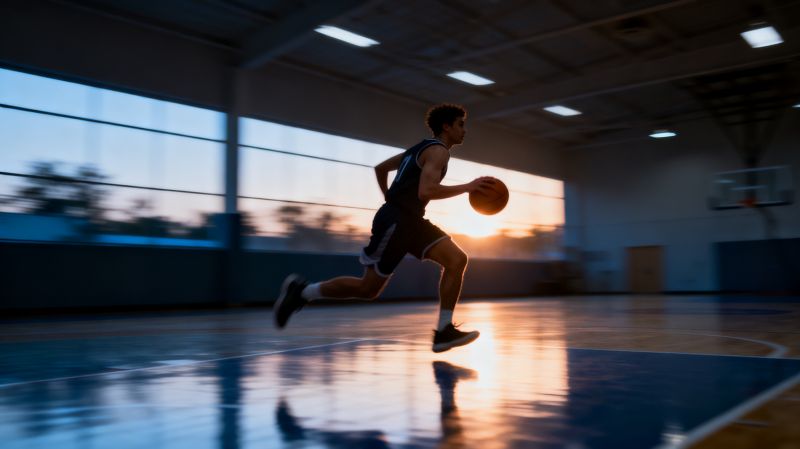
Cleveland won that possession. Transition is never just speed, either. It is the outlet pass, the first two hard dribbles, the shooter spotting up in the corner before the defense has turned its head. Miss any one of those and the whole thing collapses into a half-court slog.Tennis handles the same distance with colder manners. At every changeover, players cross the court and pass each other at the net, close enough to touch。and almost nobody does. Rafael Nadal threads his way to the bench like a man walking a plank, stepping around every painted line as though the court were wired;it is superstition, sure, but it also tells you how much of that sport happens in the head. The longer a match runs, the heavier the walk looks. Djokovic and Federer crossed the court again and again through four hours and fifty-seven minutes at Wimbledon in 2019. Federer held two championship points at 40-15 in the fifth set. He still had to walk to the net at 13-12, and so did Djokovic, and that final exchange lasted maybe eleven seconds. Changeover etiquette is stranger than it looks from the stands: same bench on odd games, towel over the head, no small talk, no eye contact. The crossing is the only moment all afternoon when the two of them share the same few square meters of ground.There is a plainer version of this, and honestly it stays with me longer than the highlight reels do. A high school gym at 6:15 in the morning。half the lights on, one kid crossing the court with a ball tucked under his arm because the far basket is the only one with an unbroken net. Sneakers squeaking on wax. The echo off empty bleachers. Floor cleaner and stale popcorn. Nothing at stake — no scouts, no clock, no crowd. He shoots forty free throws, misses half, chases the miss himself, and that is the only conditioning he gets that hour. The scoreboard is dark. I have sat in enough arenas by now to know the difference between noise and pressure, and that kid had neither, and he was working harder than half the men I watched on television that same week.
Sport also carries a code about when you cross. Basketball runs on an unwritten rule that the man who knocks you down helps you up, and making that trip costs nothing and buys plenty. Tennis demands the handshake at the net whether or not you want it;doing it on a bad day。
after a bad line call, is the price of admission. Players who handle it well share three habits — eyes up, hand or racket extended early, keep moving. Hesitate in the middle and the whole court notices. Coaches like to call this body language. It is really just timing: the sooner you move, the less it looks like an apology. The distance is 78 feet in tennis, 94 in basketball, and neither takes long. What takes long is deciding to go.A college coach once told me the game is played in the space between the two baskets, which sounds like nothing until you count how few players actually occupy it. Crossing the court is the part of the sport that never gets filmed and always gets graded. Guards who jog back get benched. Big men who trail the play get beaten down the floor by smaller ones. Watch the next game you see and follow the ball after a miss. The scoreboard tells you who won. The crossing tells you who wanted it. And the kids who walk across an empty gym before sunrise tend to turn out all right, though that data is anecdotal and I plan to keep it that way.